


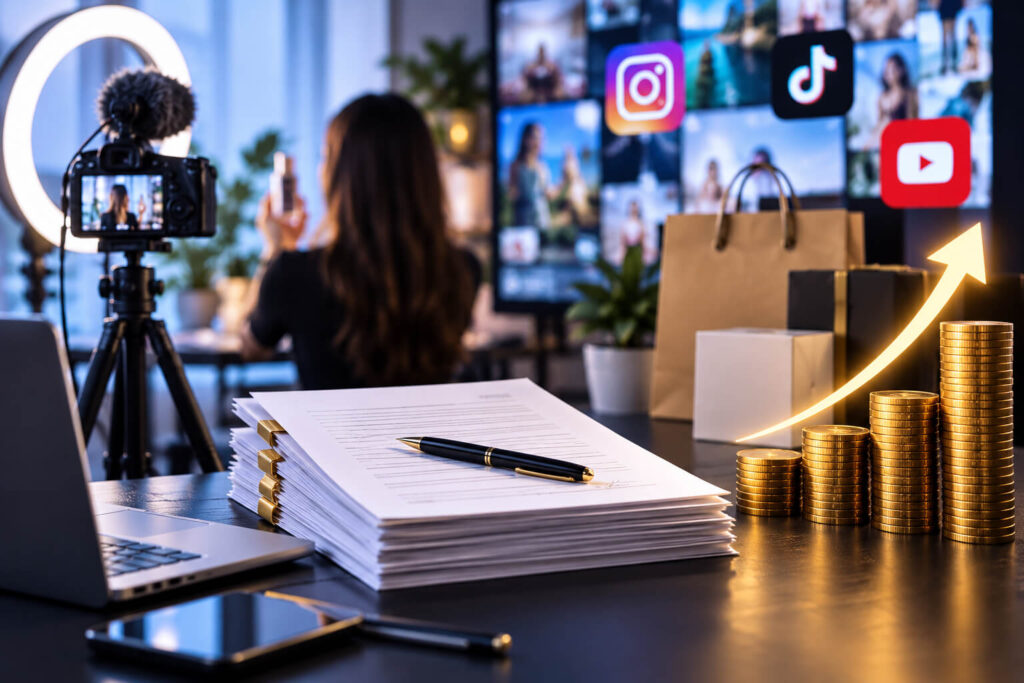
Creator marketing has a pricing problem, but the price of making the content isn’t always where things get complicated. Usage rights are increasingly becoming the expensive part of the deal.
Brands want more freedom to take a creator’s video or post and use it beyond the original campaign. That might mean turning a TikTok into a paid ad, running the content across several platforms or keeping it in circulation for months. Creators, quite reasonably, want to be paid for that extra value.
The result is a negotiation process that can quickly turn a fairly straightforward creator partnership into something much more expensive.
Usage Rights Are Becoming a Bigger Part of Creator Pricing
A creator’s initial fee generally covers the work involved in producing and publishing content. Usage rights deal with what happens afterward. Brands may want permission to use that same content in paid advertising, on their own social channels, across different markets or for an extended period. Each additional use can affect the final price and significantly increase the overall campaign budget.
There is also little consistency in how these costs are presented. Some creators separate their content fee from their usage fee, while others calculate usage according to the number of months involved. Some initial quotes may include limited organic use but exclude paid advertising entirely. This makes it difficult for marketers to compare creator rates on a like-for-like basis.
Usage and exclusivity are therefore becoming separate products within creator partnerships rather than small contractual details added at the end of a campaign.
Creator Deals Still Lack a Standard Pricing Model
The creator economy still does not have one widely accepted formula for calculating usage rights. One creator might charge a flat monthly rate, another may calculate the fee according to media spend, while someone else could bundle a limited period of usage into the original campaign price.
Even creators with similar audience sizes and engagement levels can submit very different quotes. That reflects a wider issue across influencer marketing, where follower count no longer tells brands enough about what a partnership should cost.
Pricing now depends on a mixture of audience quality, content format, production requirements, exclusivity, campaign duration and how extensively the brand intends to reuse the material. As creator marketing becomes more sophisticated, the old habit of pricing primarily according to followers is becoming much less useful.
Brands Need More Than a Creator’s Original Post
Brands are increasingly commissioning creator content for purposes that go well beyond appearing on the creator’s own social media account. A strong video can become paid social creative, appear in partnership ads, run across brand-owned channels or support a broader digital advertising campaign.
That changes the commercial value of the content. A creator may initially produce a video for TikTok or Instagram, but the brand could generate additional reach and sales by placing media spend behind it. In that situation, the creator’s value comes not only from their audience but also from their ability to produce advertising content that feels more natural than a traditional commercial.
This shift is one reason usage rights have become more important during negotiations. The original social post may only represent the first stage of a much larger campaign.
Perpetual Usage Rights Can Create Unnecessary Costs
Some brands try to simplify negotiations by requesting perpetual usage rights from the beginning. This gives them the ability to continue using creator content indefinitely without returning to renegotiate the contract later.
The convenience can come at a high price. Creators may charge significantly more when a company wants permanent rights because they are giving up control over how long their image, voice or work can continue appearing in advertising.
In many cases, brands may never actually use the content for that long. Social campaigns change quickly, products are updated and creative performance can decline as audiences see the same material repeatedly. Paying for permanent rights can therefore mean buying years of usage that the company never needs.
A shorter initial licensing period can often give brands enough flexibility without forcing them to pay upfront for hypothetical future use.
Different Industries Can Value Creator Content Differently
The value of extended creator usage also depends heavily on the industry involved. Beauty companies frequently launch new products, seasonal collections and fresh campaigns, which can reduce the usefulness of older creator material relatively quickly.
Technology campaigns can sometimes work differently. A creator video explaining a software product, device or service may remain relevant for a longer period, particularly when the product itself does not change dramatically.
These differences help explain why universal pricing remains difficult. The value of a creator asset is not determined only by the time required to film and edit it. Brands also need to consider how long that content can realistically remain useful within their marketing strategy.
Shorter Usage Windows Could Make More Sense
One way brands can control costs is by purchasing only the amount of usage they actually expect to need. Rather than automatically securing a full year or perpetual rights, marketers can negotiate an initial period and extend the agreement later if the content continues to perform.
Another approach is non-concurrent usage. A seasonal brand might need creator content during several different points in the year rather than continuously. In that situation, the company could negotiate a set number of months that can be activated during selected periods.
This gives marketers more flexibility while reducing the cost of paying for months when the content is not being used. It also creates a pricing structure that more closely reflects how many modern campaigns operate in practice.
Clearer Creator Contracts Could Remove Much of the Friction
A large part of the confusion surrounding usage rights comes from vague contractual language. Terms such as paid usage, organic usage or digital usage can sound straightforward, but different brands and creators may interpret them differently.
A stronger agreement should specify the platforms where the content can appear, the countries or territories covered, the exact licensing period, whether the brand can edit the content and whether the material can be converted into paid advertising.
Contracts should also explain what happens after the initial usage period ends. Brands may want the option to extend successful content, while creators need to know how much they will be paid if that happens.
Artificial intelligence is creating another layer of complexity. Creators are paying closer attention to how their image, voice and content might be processed or reused by AI systems, making intellectual property language increasingly important in campaign agreements.
Clearer terms at the beginning of a partnership can prevent disagreements once the campaign is already underway.
Usage Rights Are Turning Creators Into Media Assets
The broader change goes beyond rising creator fees. Brands increasingly treat creator content as a media asset that can be distributed, amplified, tested and reused across marketing channels.
That gives a successful creator video value beyond the creator’s immediate audience. A piece of content that performs well organically can later become an advertisement, appear across multiple platforms or support an ongoing acquisition campaign.
Creators are responding by pricing not only the production of the content but also its commercial life after publication. That means usage rights are likely to become an even more visible part of creator negotiations.
Clear durations, defined platforms, specific territories and agreed extension rates will not necessarily make creator marketing cheaper. They can, however, make campaign costs easier to understand and reduce surprises during negotiations.
Sources
Digiday — Marketers say usage rights are driving up the price to work with creators
https://digiday.com/media/marketers-say-usage-rights-are-driving-up-the-price-to-work-with-creators/
Digiday — Brands and influencers are not including intellectual property clauses addressing AI in their deals
https://digiday.com/marketing/brands-and-influencers-are-not-including-intellectual-property-clauses-addressing-ai-in-their-deals/