


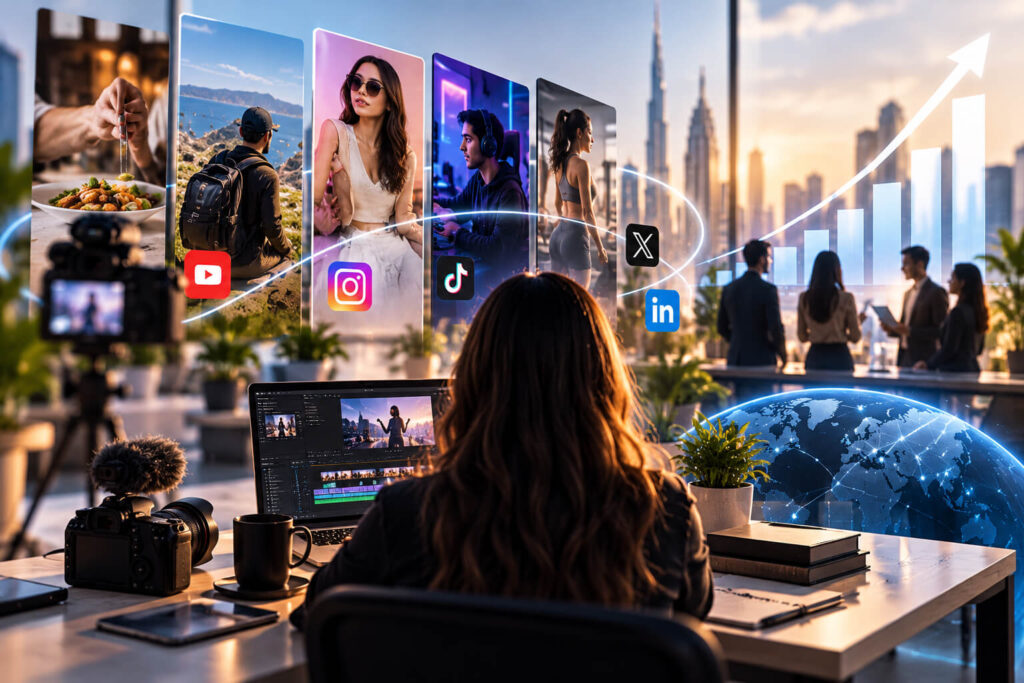
Creator marketing is becoming a more established part of advertising strategy rather than a side experiment attached to social media campaigns.
Brands that once worked with a small group of influencers are now looking at creator partnerships as a broader media channel. Better measurement, automation and artificial intelligence are helping agencies manage larger programs, while creators themselves are becoming more familiar with the business goals behind sponsored content.
Jennifer Quigley-Jones, VP of Strategy and Partnerships at PMG and founder of Digital Voices, discussed that shift during a recent episode of AdExchanger Talks. Her comments point to an industry that has grown quickly, but is still figuring out how to scale without losing the authenticity that made creator marketing valuable in the first place.
Creator Marketing Has Moved Far Beyond Instagram
Creator marketing looked very different when Quigley-Jones was working at YouTube several years ago. Instagram dominated many agency conversations around influencers, while YouTube creators often received less attention despite already showing an ability to influence purchasing decisions. TikTok had not yet emerged as the global platform it is today, and creator spending was far more concentrated across a limited number of channels.
That market gap eventually helped lead Quigley-Jones to launch Digital Voices in 2017. The agency focused on helping brands work more effectively with creators across digital platforms. PMG later acquired Digital Voices in 2026, reflecting how creator marketing has moved closer to the center of mainstream advertising strategy.
Influencer Marketing Is Becoming a Broader Business Strategy
Brands are increasingly moving away from treating influencer activity as a one-off campaign tactic. Instead of hiring creators only around launches or seasonal promotions, advertisers are starting to build creator programs into ongoing media planning, brand awareness, customer acquisition and performance marketing.
That shift changes how companies approach partnerships. Rather than simply asking creators to publish content, marketers are placing more emphasis on campaign objectives and measurable outcomes. A program may focus on reach, engagement, sales or customer acquisition depending on the brand’s priorities, giving creators a clearer understanding of what the partnership is expected to achieve.
Technology Could Allow Brands to Work With Far More Creators
One of the biggest barriers to large-scale creator marketing has always been management. Working with 20 or 30 creators already involves contracts, content approvals, communication, tracking and performance reporting. Expanding that model to hundreds of creators becomes difficult without stronger technology behind the process.
Quigley-Jones suggested that AI and improved performance analysis could help brands move from campaigns involving a few dozen creators to programs involving hundreds or even around 1,000 participants. That kind of scale could allow more creators to access brand budgets while also giving advertisers a wider variety of voices, audiences and content formats to work with.
AI Could Take Over More of the Operational Work
Artificial intelligence may have its biggest impact on the operational side of creator marketing rather than the creative side. Large campaigns generate huge amounts of information, from audience demographics and engagement rates to conversion data and content performance. Sorting through that information manually becomes harder as creator programs expand.
AI tools can help agencies identify patterns, compare performance and manage repetitive processes more efficiently. That could allow teams to oversee larger creator networks without adding staff at the same pace. The creative work, however, still depends heavily on the creator’s own voice, audience knowledge and understanding of the platform where the content appears.
Creators Are Becoming More Commercially Sophisticated
Creators are also learning more about the marketing objectives behind sponsored campaigns. Knowing how content contributes to conversions, brand awareness or customer acquisition can make it easier for creators to build longer relationships with advertisers instead of relying only on one-off deals.
This does not mean creators need to become advertising executives. It does mean that understanding metrics, audience quality, testing and campaign goals can strengthen their position when working with brands. A creator who understands both their community and the advertiser’s business objectives can contribute more strategically to a campaign.
Stronger Partnerships Depend on Better Communication
Technology alone cannot create an effective creator partnership. Brands and creators still need to agree on what success looks like before content is produced. Advertisers need to explain their goals clearly, while creators need enough flexibility to communicate with audiences in a way that feels natural to their channels.
This exchange becomes increasingly important as creator budgets rise. Brands often have access to customer data and campaign objectives, while creators understand the tone, habits and interests of their own audiences. Combining those perspectives can produce more effective campaigns than simply handing a creator a rigid brief.
Creator Marketing Is Building the Infrastructure for Its Next Stage
The creator economy has already moved beyond the point where brands need to be convinced that influencers can generate attention or sales. The bigger challenge now is building systems that can support creator marketing at a much larger scale.
Better data, automation and AI could help agencies manage more partnerships, while creators continue developing a stronger understanding of commercial objectives. The next stage of the industry will likely depend on whether brands can expand creator programs without making them feel as standardized as traditional advertising.
Creator marketing is growing up. The question now is how large it can become without losing the personality and audience connection that made it work in the first place.
Sources
AdExchanger — Creator Marketing Is Growing Up
https://www.adexchanger.com/adexchanger-talks/creator-marketing-is-growing-up/
Digital Voices
https://www.digitalvoices.com/