


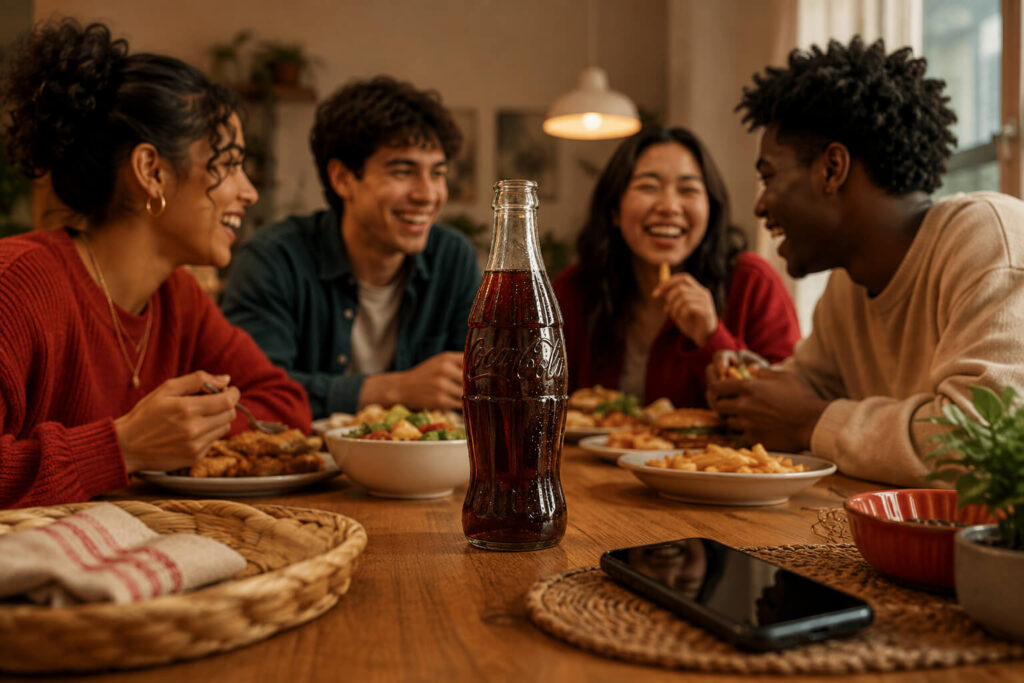
Coca-Cola is asking people to do something that sounds increasingly difficult: put the phone down, close the laptop and finish a meal without checking what happened online.
Its new global campaign, “The World Will Wait,” targets Gen Z and millennial consumers whose work, family responsibilities and digital habits regularly compete with time around the table.
The message is simple. Emails can sit unanswered for a few minutes. Laundry will still be there. The people eating dinner with you might not always be.
Influencers are being brought in to carry that idea into social feeds, creating the slightly unusual sight of a digital campaign encouraging people to step away from digital platforms.
Influencers Turn AFK Into a Mealtime Message
The creator component borrows from AFK, the gaming abbreviation for “away from keyboard.”
Coca-Cola is reshaping the phrase around shared meals through the #AFKMeals concept. Participating influencers will tell followers that they are stepping offline to eat with friends, partners or family members.
Rather than treating a break from posting as something that needs an apology, the campaign presents it as a deliberate choice.
That matters for creators, whose work often rewards constant visibility. Social platforms rarely encourage anyone to disappear, even briefly. Coca-Cola is using that tension as part of the campaign rather than pretending it does not exist.
Creators will still deliver the brand message through social media. The desired action, though, happens away from the screen.
“The World Will Wait” Pushes Back Against Hustle Culture
The campaign is aimed at younger adults entering particularly busy stages of life.
Some are managing demanding careers. Others are raising children, handling household responsibilities or trying to keep personal relationships alive while remaining reachable throughout the day.
Coca-Cola’s campaign argues that many supposedly urgent tasks are not quite as urgent as they appear.
“In a world that constantly demands our attention, we’ve observed a growing tension among our consumers — especially younger generations — who truly desire genuine connection but often feel overwhelmed by the urgent pressures of daily life,” Coca-Cola global category president Arnab Roy said.
The campaign is not attacking technology outright. Coca-Cola is instead focusing on the moments that get lost when work notifications, group chats and endless scrolling follow people to the dinner table.
Two Films Show What Constant Work Can Cost
“The World Will Wait” includes two main campaign films titled “Laptop Face” and “The Most Important Meeting.”
“Laptop Face” follows a family gathering for a home-cooked meal without the father at the table. He remains in a dark office, partly hidden behind his laptop while continuing to work.
His son later draws a family picture that reflects the same absence. The father appears with his face obscured, almost swallowed by the computer that keeps pulling him away.
That small moment lands harder than a lecture about work-life balance. He eventually closes the laptop and joins the next family meal.
The second film, “The Most Important Meeting,” continues the same idea: the appointment that deserves attention may not be sitting inside a work calendar.
Coca-Cola Uses Outdoor Ads to Make Work Language Feel Absurd
The campaign’s outdoor advertising takes familiar workplace language and drops it into mealtime situations.
One advertisement reads: “No one ever said ‘this meal could have been an email.’”
Another says: “Laundry can wait. Fried Chicken & Coca-Cola can’t.”
The lines work because they are recognisable without needing much explanation. People have become accustomed to treating every notification, household task and work request as an immediate demand.
Coca-Cola flips that habit around. Dinner becomes the urgent event. Everything else gets postponed.
Digital activations will also allow consumers to unlock campaign-related rewards, keeping an online layer attached to an idea built around spending less time online. That contradiction is difficult to avoid in modern advertising, but it also makes the influencer element more interesting.
Creators Give Coca-Cola Access to Everyday Moments
A television advertisement can show a family meal. A creator can make that behaviour feel more personal.
Influencers already bring audiences into kitchens, restaurants, grocery shops and family routines. Food creators can build the campaign into recipes. Lifestyle personalities can show the moment they stop working for dinner. Parenting creators can frame it around protected family time.
The format leaves room for individual interpretation rather than forcing every partner to repeat the same polished script.
That is where the campaign may gain traction. Audiences do not need another influencer holding up a bottle and listing product features. Coca-Cola is giving creators a behaviour to demonstrate instead.
The product remains visible, but the real subject is attention.
Coca-Cola Keeps Moving Closer to Food Culture
“The World Will Wait” also strengthens Coca-Cola’s effort to position the drink as a natural part of meal occasions.
Earlier campaigns have connected the brand with home cooking, restaurants and major fast-food chains. Coca-Cola has worked with food-service partners including Domino’s, Popeyes and Wendy’s while competing with Pepsi’s long-running claim that its drink is the better food pairing.
This campaign takes a more emotional route.
Instead of arguing over which soft drink tastes better with fried chicken or pizza, Coca-Cola is focusing on why people should sit down and eat together in the first place.
The drink becomes part of the scene rather than the entire story.
The Campaign Runs Globally but Skips the US
“The World Will Wait” is rolling out across global markets, excluding the United States.
WPP Open X developed the campaign, led by Grey with support from Ogilvy, WPP Production and WPP Media. Its wider release includes the two films, influencer partnerships, digital activations and out-of-home placements.
For the creator economy, the campaign shows how major brands are trying to make influencer marketing feel less like rented reach.
Coca-Cola is not only asking creators to display a product. It is asking them to model a small cultural shift — log off, sit down and pay attention to whoever is already in the room.