


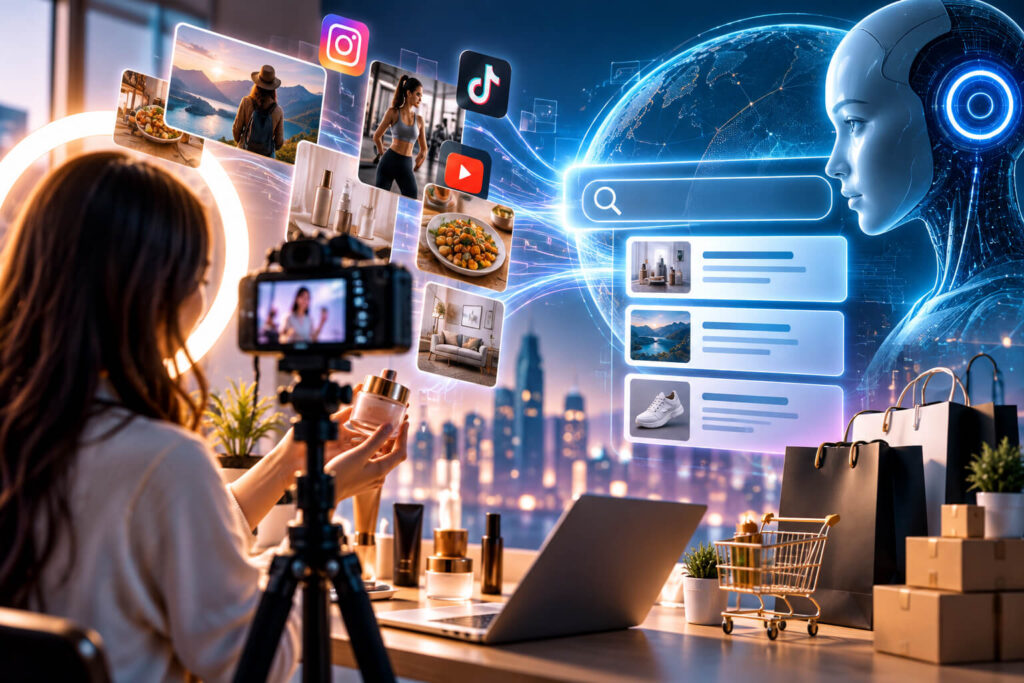
Search marketing and creator marketing are beginning to overlap in a way that would have sounded unusual only a few years ago. Consumers are increasingly asking AI platforms for recommendations, comparisons and product advice instead of relying only on traditional search engines.
That shift creates a new visibility challenge for brands. A company may have a strong website, active social channels and a large advertising budget, yet still struggle to appear when users ask ChatGPT, Gemini or other AI-powered tools about products in its category.
Creator content is starting to become part of the answer.
Creator Marketing Is Becoming Part of AI Search Strategy
Brands have traditionally worked with creators to generate awareness, reach new audiences, improve engagement and drive sales. Those goals still matter, but AI search adds another layer to the equation.
Creator content can now contribute to the wider information ecosystem that AI platforms use when generating responses. A detailed YouTube review, expert article, newsletter, podcast discussion or product comparison can remain discoverable long after a campaign ends.
That means the value of a creator may no longer depend only on how many people see a post during the first few days. Brands increasingly have to consider whether that creator produces content that continues to surface when consumers search, research or ask AI systems questions about a category.
Why Third-Party Voices Matter More in AI Discovery
Brand-owned content remains important, but AI systems do not rely exclusively on corporate websites when forming answers. Search engines and AI assistants may also surface information from publishers, forums, review websites, creators and other third-party sources.
That gives independent and creator-led content more strategic weight.
A creator can explain how a product performs in everyday use, compare it with alternatives and discuss strengths or weaknesses in language that feels less controlled than traditional marketing copy. That kind of context can help users understand a product more naturally.
For brands, creator content can therefore support more than social engagement. It can help build a broader digital footprint around the company, product or service.
The Best Creator May Not Be the One With the Biggest Audience
Follower count has long been one of the first metrics brands look at when selecting creators. Engagement rate, audience demographics and conversion performance later made that process more sophisticated.
AI search may push marketers to look at another factor: discoverability.
A smaller creator who publishes detailed, searchable content could create more long-term value than a larger influencer whose promotional content disappears quickly into a fast-moving social feed.
A specialist YouTube reviewer, industry newsletter writer or niche creator may have fewer followers but stronger authority around specific topics. If their content consistently appears in search results or gets referenced in AI-generated answers, that relevance could become valuable for brands trying to improve visibility in AI search.
Brands Should Brief Creators Around Questions, Not Advertising Copy
Creator briefs may also need to change.
Instead of simply asking creators to repeat several product benefits, brands can start by identifying the questions consumers already ask about their category.
People might want to know which product works best for a specific situation, how one service compares with another, whether a subscription is worth paying for or what a beginner should choose. These are the same types of questions users increasingly enter into AI assistants.
Creators who answer those questions directly can produce content that feels more useful than a standard promotional post. The brand still gains exposure, but the content exists because it solves a real information need rather than simply repeating advertising messages.
That makes the content more useful to audiences and potentially more relevant to search and AI discovery systems.
YouTube, Podcasts and Long-Form Content Gain New Value
Not every creator format offers the same long-term discoverability.
Short-form platforms such as TikTok, Instagram Reels and YouTube Shorts remain extremely effective for fast reach and engagement. However, longer formats can provide more detailed information for search engines and AI systems to understand.
YouTube videos with descriptive titles and transcripts, public podcast pages, detailed blog posts, newsletters and product comparisons create more context around a topic. That depth can make the content useful beyond the original campaign period.
Brands may therefore start building campaigns that combine short-form visibility with longer creator content. A short video can generate attention while a longer review, interview or walkthrough remains searchable for months or even years.
AI Search Is Creating a New Creator Marketing Metric
Creator marketing has traditionally relied on metrics such as impressions, engagement, clicks, conversions and earned media value.
AI discovery creates another question entirely: how often does the brand appear in AI-generated answers?
Marketers are beginning to track terms such as AI visibility, generative engine optimization, answer engine optimization and share of model. The terminology continues to evolve, but the objective is similar.
Brands want to understand what happens when a consumer asks an AI platform about their market.
A company could test relevant prompts across multiple AI tools, record which brands appear and identify which sources receive citations. After a creator campaign launches, marketers can repeat the same tests to see whether visibility changes.
The method is still imperfect, but it gives brands another way to evaluate how creator content may influence discovery beyond social platforms.
Creator AEO Is Becoming a Bigger Business Opportunity
Creator marketing platforms are already moving toward AI search optimization.
Companies are developing tools that analyze which prompts consumers use, how brands appear in AI-generated answers and which creator content may help strengthen those signals.
This reflects a wider shift across influencer marketing. Platforms that once focused mainly on creator discovery, campaign management and performance analytics are now exploring how creator content can influence AI-powered discovery.
For brands, this may eventually turn creator partnerships into a more permanent part of search strategy rather than a separate marketing channel.
Measuring the Real Impact Is Still Complicated
The opportunity is significant, but attribution remains difficult.
A brand appearing more frequently in AI responses after launching a creator campaign does not automatically prove that the creator caused the improvement. AI models change frequently, search indexes update and competitors continue publishing new content.
Different prompts can also generate completely different answers.
Another challenge involves sponsored content. AI platforms may treat openly promotional content differently from independent reviews or editorial coverage, and those systems rarely disclose exactly how they weigh each source.
Brands should therefore avoid treating creator-driven AI visibility as a guaranteed formula. The strategy is still developing, and measurement methods will likely become more sophisticated as marketers gain more experience.
Creators Are Becoming More Than Distribution Channels
For years, brands often viewed creators primarily as access points to audiences.
A company paid a creator, the creator published content and marketers measured the resulting reach or sales. Once the campaign ended, the value of that post often faded quickly.
AI search could extend that lifespan.
A strong creator can still generate immediate attention, but their content may also continue helping people understand a product, compare options or discover a brand long after the original post goes live.
That makes creator content potentially more durable than traditional campaign thinking suggests.
Creator marketing, SEO and AI optimization are beginning to move closer together. Brands need useful owned content, credible third-party discussions and creators who can explain products naturally.
The next phase of creator marketing may not be about winning another social feed.
It may be about becoming part of the answer.
Sources
Ad Age – How Brands Can Use Creators for AI Search Visibility
https://adage.com/influencers-creators/aa-how-brands-can-use-creators-for-ai-search-visibility/
Later – How Creator Marketing Builds Brand Visibility in AI Search
https://later.com/blog/how-creator-marketing-builds-brand-visibility-in-ai-search/