


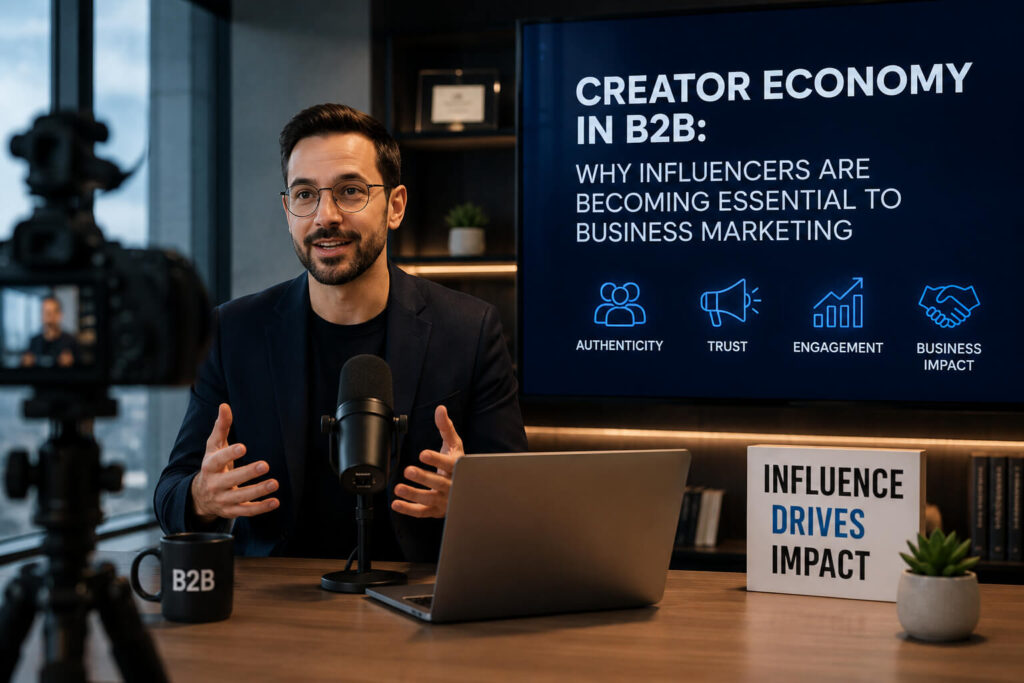
The creator economy is no longer just about lifestyle influencers, beauty vloggers, gamers, or consumer product promotions. In 2026, creators are becoming a serious force in B2B marketing, shaping how business buyers discover, evaluate, and trust brands.
For years, many B2B companies viewed influencer marketing as something mainly built for consumer brands. That mindset is quickly changing. As professional buyers spend more time on LinkedIn, newsletters, podcasts, and niche expert communities, creators with real industry authority are becoming powerful voices in the buying journey.
The creator economy in B2B is not about chasing viral posts or celebrity endorsements. It is about credibility, expertise, and trust.
The Creator Economy Is Becoming a Major Business Channel
The creator economy has grown into a massive global market. Analysts estimate that the broader creator economy could reach hundreds of billions of dollars in value within the next few years. At the same time, influencer marketing continues to grow as brands shift more budget toward trusted third-party voices.
For B2B marketers, this matters because business buyers are no longer relying only on company blogs, product demos, analyst reports, or sales teams. They are listening to independent experts who understand their industry, their challenges, and their decision-making process.
This is where creators now play a major role.
A creator with a focused professional audience can influence how buyers think about software, services, platforms, and industry trends. In many cases, that influence happens before a buyer ever speaks to a sales representative.
Why B2B Creators Are Different From Consumer Influencers
Traditional influencer marketing often focuses on follower count, reach, likes, and engagement. In B2B, those numbers still matter, but they are not the most important factor.
The real value comes from audience quality.
A creator with 8,000 LinkedIn followers may be more valuable to a B2B brand than a lifestyle influencer with 500,000 followers if that smaller audience includes founders, executives, procurement leaders, marketers, engineers, or decision-makers in a specific industry.
This is why the rise of the “operator-creator” is so important.
Operator-creators are professionals who have built audiences by sharing real expertise. They may be former CMOs, SaaS founders, sales leaders, analysts, consultants, product experts, or experienced operators who know a specific market deeply.
Their content works because it feels practical, specific, and trustworthy. Instead of posting generic brand messages, they share lessons, frameworks, opinions, and real-world insights that other professionals find useful.
Trust Is Now a Competitive Advantage in B2B Marketing
B2B buyers are overwhelmed with branded content. Every company has blog posts, newsletters, webinars, case studies, and social media updates. The problem is that buyers know this content is created to sell.
Creator content feels different.
When a respected expert shares a tool, explains a category, compares solutions, or discusses a business problem, the message often carries more weight than a traditional ad. Buyers are more likely to trust someone who has experience in the field than a brand speaking about itself.
This does not mean brand content is no longer useful. It means brand content is stronger when supported by credible external voices.
For B2B companies, creator partnerships can help build trust faster, especially in markets where buyers need education before they are ready to make a decision.
LinkedIn Is Turning B2B Creator Marketing Into Infrastructure
LinkedIn has become one of the most important platforms for the B2B creator economy. The platform is no longer just a place for job updates and company announcements. It has become a publishing, networking, and influence platform for professionals.
Recent LinkedIn creator tools show where the market is heading. Features that connect brands with creators, support paid amplification, and simplify creator partnerships are making B2B influencer marketing easier to scale.
This matters because B2B creator marketing has historically been relationship-driven and manual. Brands had to find creators, negotiate partnerships, manage payments, and measure performance with limited infrastructure.
Now, platforms like LinkedIn are helping make creator partnerships more structured and accessible.
For B2B brands, this means creator marketing is becoming less experimental and more like a repeatable media channel.
How Creators Influence the B2B Buying Journey
One of the biggest misconceptions about B2B creator marketing is that it only supports brand awareness. In reality, creator content can influence multiple stages of the buying funnel.
At the top of the funnel, creators can introduce audiences to new trends, categories, and problems. In the middle of the funnel, they can help buyers understand different approaches, frameworks, or solutions. Near the bottom of the funnel, trusted creators can help validate a buyer’s decision.
This is especially important in B2B because buying decisions often involve risk. A buyer may need approval from multiple stakeholders, compare several vendors, and justify the purchase internally.
A credible creator can reduce uncertainty by providing independent perspective.
That influence may not always show up immediately in direct conversions. B2B sales cycles can take weeks or months. However, creator content can shape perception long before a lead fills out a form or books a demo.
What B2B Brands Should Do Now
B2B companies that want to take creator marketing seriously should avoid simply copying consumer influencer tactics. The strategy needs to match how business buyers actually behave.
First, brands should evaluate creators based on audience relevance, not just audience size. A smaller creator with a concentrated audience of ideal buyers may deliver stronger results than a larger creator with a broad but less relevant following.
Second, brands should match creators to the right funnel stage. Industry commentators and analysts may be useful for awareness, while operator-creators with hands-on experience may be more effective for consideration and decision-stage content.
Third, marketers should plan for longer attribution windows. A LinkedIn post, podcast mention, or newsletter feature may influence a buyer months before the deal closes.
Finally, brands should build long-term relationships with creators instead of treating every partnership as a one-off campaign. Trust compounds over time, and repeated collaboration can make creator partnerships more authentic.
The Future of B2B Marketing Will Include More Creators
The creator economy in B2B is no longer a small trend. It reflects a larger shift in how professionals consume information and make decisions.
Buyers want credible voices. They want expert opinions. They want practical insight from people who understand their challenges.
For B2B brands, this creates a major opportunity. Companies that build strong creator partnerships now can earn trust earlier in the buyer journey, reach more relevant audiences, and stand out in crowded markets.
The next phase of influencer marketing will not only be driven by consumer brands and viral personalities. It will also be shaped by industry experts, LinkedIn creators, newsletter writers, podcast hosts, and professional operators who influence business decisions every day.
For B2B marketers, the message is clear: the creator economy is no longer optional. It is becoming part of the modern business marketing playbook.