


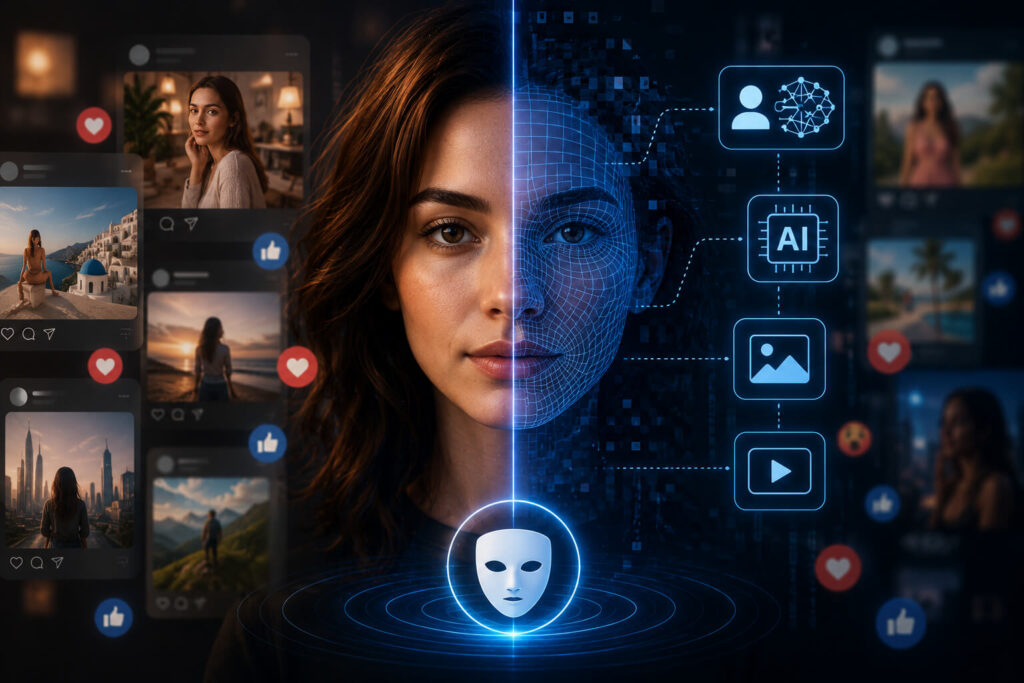
AI content creators are no longer easy to spot at first glance. What was once an obvious digital experiment has now become an increasingly integral part of everyday social media feeds, where virtual influencers, AI avatars and synthetic personalities are increasingly blending in with human creators.
Back in the early days, virtual influencers were different in that they were polished, futuristic and obviously manufactured. They often required creative agencies, production teams, and expensive digital work. Today, that barrier has dropped. With accessible AI image, video, voice, and editing tools, almost anyone can create a realistic online personality and use it to post content, promote products, build an audience, or even sell courses teaching others how to do the same.
AI Influencers: From Novelty to Normal
The rise of AI content creators demonstrates how quickly new technology can be absorbed into online culture. In the beginning, virtual influencers were curiosities. They gained attention because they were unusual, highly produced, and obviously artificial.
Now, the situation is different. AI-generated creators can look like lifestyle influencers, fitness personalities, beauty creators, travel bloggers, or entertainment accounts. Many of them copy familiar creator formats: selfies, short videos, product promotions, motivational captions, reaction clips, and trend-based content.
This makes it harder to tell them apart from human influencers, especially in feeds that already contain a lot of filters, edits, staged content and heavily produced visuals.
Why AI Content Creators Are Harder to Detect
Several changes are making AI creators more convincing.
First, image-generation tools have improved dramatically. A synthetic face can now look realistic enough to pass as a real person during casual scrolling.
Second, AI video and voice tools are catching up. Virtual personalities can now speak, move, react, and appear in short-form video formats that feel familiar to TikTok, Instagram Reels, and YouTube Shorts users.
Third, the cost of creating AI avatars has fallen. Creators no longer need a full studio or advanced technical skills to build a digital persona. A small set of AI tools can now produce photos, captions, voices, videos, and even automated interactions.
That accessibility has opened the door for a wave of AI content creators, ranging from harmless experimental accounts to low-quality spam, misleading promotions, scams, and synthetic personas designed to manipulate audiences.
Social Media Platforms Are Struggling With the Gray Area
The growth of AI content creators creates a difficult problem for social media platforms.
Most major platforms now have policies around synthetic media, especially when AI-generated content could mislead viewers. Some need labels when it comes to realistic AI-generated images, videos or audio. However, many rules focus on individual posts rather than the identity of the account itself.
That leaves a major gray area. An AI influencer may not be impersonating a real person. The account may not be posting graphic content or directly violating spam rules. It could even show that some of the content was produced by AI. But the real question is: should platforms treat synthetic personalities differently than human creators?
For now, many platforms appear to be balancing two conflicting goals. They want to promote AI tools as creative features, but they also need to prevent feeds from being overwhelmed by low-quality AI-generated content.
The Creator Economy Could Face a Trust Problem
The creator economy is built on connection, personality, and perceived authenticity. Creators are real, relatable, entertaining, aspirational, trusted—and audiences know it.
That relationship is threatened by AI content creators.
Trust is harder to maintain when users struggle to know if a creator is human, partly AI-assisted, or fully synthetic. This is especially important when AI avatars are used to market products, promote political messages, sell subscriptions, or form emotional bonds with followers.
This also raises questions for brands. Working with AI influencers may mean lower costs, more control, and fewer scheduling issues, but it can also carry reputational risks if audiences feel deceived or if the synthetic creator is linked to spam, scams, or misleading content.
AI Influencers Are Emerging as a Business Opportunity
Even with the worries, AI creators are shaping up to be a legitimate business category. There are agencies, tools, marketplaces, and training programs popping up around synthetic influencers. For some entrepreneurs, the appeal of creating AI influencers is that it’s a new way to make money without ever having to step in front of a camera.
This has led to a gold rush atmosphere. Some well-known AI avatars are getting headlines, while many smaller accounts are working quietly in the background. Some are built for entertainment or experimentation. Others are designed for affiliate marketing, dropshipping, adult-style content, political messaging, or audience farming.
The result is a fast-growing ecosystem where the line between creativity, automation, and deception is becoming harder to define.
What’s next for AI Content Creators?
The next big hurdle is likely to be transparency. Platforms may need more stringent rules for accounts that represent fully synthetic people, not just labels for individual AI-generated posts.
Users might also want more control over what they see. As AI-generated content becomes more prevalent, there might be more demand for AI-free feeds, better labeling, and more robust creator identity verification.
For human influencers, the rise of AI content creators could make authenticity even more important. Genuine behind-the-scenes content, live interactions, personal stories, and transparent brand partnerships could become more powerful signals of trust.
AI creators are not going away. But as they become more realistic and more common, social media platforms, brands, creators, and audiences will need to decide how much of the creator economy should remain human.
Key Takeaway
AI content creators are becoming harder to spot because the tools used to create them are cheaper, more realistic, and widely available. While virtual influencers may offer new creative or commercial possibilities, they also raise serious questions of authenticity, disclosure, trust and the future of social media.
As AI-generated personalities continue to spread across platforms, the biggest issue may not be whether they can attract attention. It may be whether audiences still know who, or what, they are paying attention to.