


Influencer marketing used to run on instinct. A brand liked a creator’s style, checked the follower count, looked at a few posts, maybe asked for media kit numbers, then hoped the campaign worked.
That version still exists, of course. But it is starting to look old.
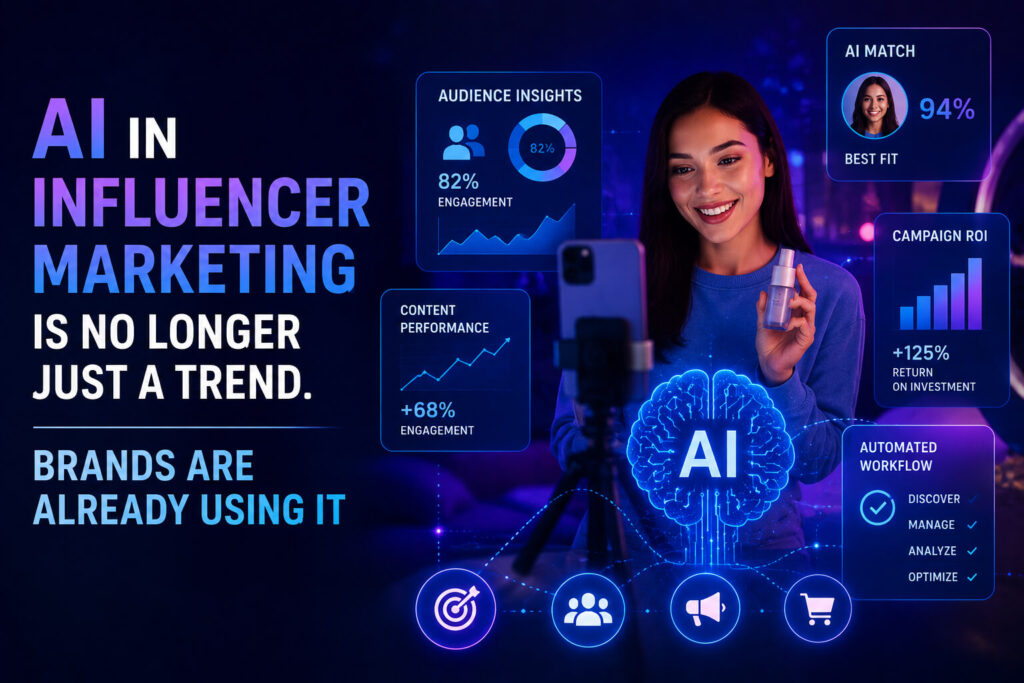
Artificial intelligence is now becoming part of the everyday influencer marketing process, from finding creators to checking audience quality, predicting campaign results, and managing large creator partnerships. According to industry data cited by ABP Live, 92% of brands have already integrated AI into their influencer marketing workflows by 2026. The shift is not really about replacing creators. It is more about brands wanting fewer guesses and more proof before spending campaign budgets.
Brands Are Using AI to Find the Right Creators Faster
Creator discovery has always been one of the messiest parts of influencer marketing. There are too many accounts, too many inflated numbers, and too many creators who look good on the surface but do not actually match the audience a brand needs.
AI is changing that part first.
Instead of searching manually through hashtags, follower counts, or basic niche categories, brands are now using AI-powered tools to scan creator profiles based on audience behavior, content style, engagement quality, and even purchase intent. ABP Live reported that 60.2% of marketers now rely on AI tools for creator discovery instead of traditional manual searches.
That matters especially for micro-influencers. Some of them do not have huge numbers, but they have sharper communities, stronger trust, and better engagement. AI tools can help surface those creators when a normal follower-count search would probably miss them.
Influencer Vetting Is Getting More Serious
Fake followers are still a problem. So are bot comments, suspicious engagement spikes, and audiences that look active but do not convert.
This is where AI is becoming useful for brands that do not want to waste money on polished but weak creator profiles. Fraud detection systems can now review audience patterns, flag unusual activity, and help brands check whether a creator’s engagement is real or inflated.
The same report noted that these AI-based vetting tools have reduced the time needed to evaluate creators by around 70%. That is a big deal for agencies and marketing teams handling several campaigns at once. Less spreadsheet digging. Less manual checking. Fewer awkward surprises after the campaign goes live.
Predictive Analytics Enters Influencer Campaigns
One of the biggest changes is happening before a campaign even starts.
Brands are using predictive analytics to estimate how a campaign might perform before they commit the budget. The tools can look at creator history, audience signals, previous engagement patterns, and campaign goals to give marketers a better idea of possible reach, conversions, and return on investment.
It is not magic. It will not make every campaign successful.
But it does make influencer marketing feel less like a gamble. For brands spending serious money on creator partnerships, that extra layer of forecasting can influence who gets hired, how much they are paid, and which platforms get priority.
Creators Are Using AI Too
The AI shift is not only happening on the brand side. Creators are also bringing AI into their own work.
ABP Live cited industry figures showing that 86% of influencers now use generative AI in some part of their content creation process. Many are using it for script drafts, video editing, content planning, caption ideas, workflow organization, and performance analysis.
That part feels inevitable. Creators are expected to post more, test more formats, respond faster, and stay relevant across several platforms at once. AI tools can take some of the pressure off, especially for creators working without a full team.
Still, there is a line here. Audiences follow creators because they want a voice, a face, a personality, a point of view. If too much of the content starts feeling machine-made, people notice. Maybe not immediately, but they do.
Campaign Platforms Are Becoming More Automated
As influencer programmes grow, brands are also turning to campaign management platforms that include AI features.
These platforms can help with creator outreach, tracking, commission management, reporting, and real-time performance monitoring. ABP Live mentioned Influencer Hero as one of the platforms adding AI capabilities for managing larger creator campaigns more efficiently.
This is where influencer marketing starts looking less like a side experiment and more like a proper performance channel. Brands want dashboards. They want measurable results. They want to know which creator drove clicks, sales, sign-ups, or awareness.
The days of “we got good vibes from the campaign” are not completely gone. But they are definitely under pressure.
The Authenticity Problem Has Not Gone Away
AI can make influencer marketing faster. It can make it more measurable. It can help brands avoid bad partnerships.
But it also creates a new problem.
If many brands use the same AI discovery tools, they may end up chasing the same creators. That could push up campaign costs and make influencer feeds feel even more crowded with similar partnerships. There is also the bigger question of trust. How much AI involvement is too much? When does content stop feeling personal?
That question will not disappear.
The smarter brands will probably use AI for the boring but important work: research, filtering, fraud checks, reporting, and performance predictions. The human side still has to stay human. Relationship building, creative direction, tone, timing, and audience trust cannot just be automated and left alone.
AI Is Making Influencer Marketing More Data-Driven
Influencer marketing is growing up. Maybe not perfectly. Maybe not quietly either.
AI is pushing the industry toward cleaner data, faster decisions, and more structured campaign planning. Brands can now find creators faster, check audience quality more carefully, and track results with better visibility. Creators, meanwhile, are using AI to keep up with the speed and volume of modern content production.
The real test is whether the industry can use these tools without making creator marketing feel cold and overly engineered.
Because audiences do not follow data. They follow people.